





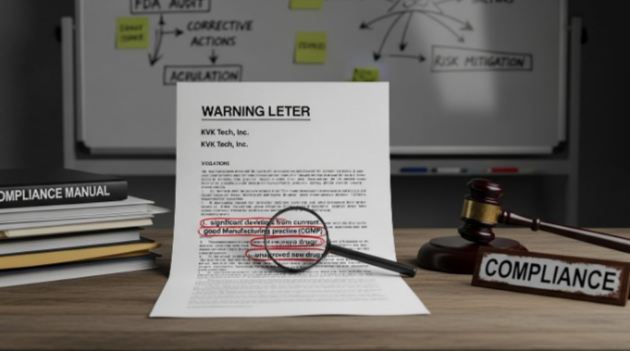
Recently, the expression “kvk tech warning letter” has been appearing on search engines and related discussions being held on various forums and discussions pertaining to compliance. This has left numerous persons, as well as companies, curious about the meaning associated with this letter and with whom this letter has been addressed.
A KVK Tech warning letter is typically understood as an “official or semi-official notice delivered to any entity connected with KVK Tech concerning perceived infractions, non-compliance, deceptive acts, or regulatory issues.” While this terminology may seem ominous, it should be noted that not all warning notices imply any form of impropriety, as they may be proactive, corrective, or informative responses.
This piece offers a thorough analysis of the KVK Tech warning letter, extending from the history of the notice, the reasons for issuance, the implications thereof, and the ways in which the receiving entity can deal with the letter. Whether you’re the owner of an entity, a technologist, or just researching the issue, this issue will undoubtedly shed the whole picture.
Understanding KVK Tech: A General Overview
Before diving into the warning letter itself, it’s important to understand KVK Tech as a term.
KVK Tech is often referenced in connection with:
-
Technology-based services
-
Software development or IT solutions
-
Digital platforms or tech-enabled operations
-
Business entities operating under similar naming conventions
In many cases, KVK Tech may be a registered company, a brand name, or a tech-focused organization operating in regional or international markets. Because tech companies frequently operate across borders, they are often subject to multiple compliance frameworks, increasing the likelihood of receiving formal notices or warnings.
What Is a Warning Letter?
A warning letter is a formal document issued by an authority, regulator, or oversight body to notify an organization or individual of:
-
Observed irregularities
-
Potential violations of rules or policies
-
Compliance gaps
-
Misrepresentation or misleading information
Unlike penalties or legal actions, warning letters are usually non-punitive at the initial stage. Their primary purpose is to alert and correct, not to punish.
When it comes to the KVK Tech warning letter, the same principle generally applies.
Why a KVK Tech Warning Letter Might Be Issued
There are several common reasons why a KVK Tech warning letter may be generated. These reasons vary depending on jurisdiction, industry, and operational scope.
1. Regulatory Non-Compliance
One of the most common triggers for a warning letter is failure to comply with regulations, such as:
-
Data protection laws
-
Consumer protection guidelines
-
Technology licensing requirements
-
Corporate disclosure obligations
Tech companies often handle user data, financial transactions, or proprietary software, making regulatory oversight especially strict.
2. Misleading Claims or Marketing Practices
Another reason behind a KVK Tech warning letter may involve misleading promotional content, such as:
-
Exaggerated service claims
-
Unverified performance metrics
-
Ambiguous pricing structures
-
Misrepresentation of certifications or partnerships
Regulatory bodies closely monitor tech marketing to ensure transparency and consumer safety.
3. Intellectual Property Concerns
In the tech sector, intellectual property (IP) is critical. Warning letters may be issued if there are concerns about:
-
Unauthorized software usage
-
Licensing violations
-
Trademark or copyright infringement
A KVK Tech warning letter in this context is often a first step before escalation.
4. Customer Complaints and Red Flags
Repeated customer complaints can also trigger investigations. These may involve:
-
Poor service delivery
-
Refund disputes
-
Lack of customer support
-
Breach of contractual terms
When complaints reach a certain threshold, authorities may issue a warning letter to prompt corrective action.
5. Operational Transparency Issues
Tech companies are expected to maintain transparent operations. Issues such as:
-
Incomplete business registration
-
Unclear ownership structure
-
Inconsistent reporting
can all result in a KVK Tech warning letter being issued.
What Does a KVK Tech Warning Letter Typically Contain?
Although formats may vary, most warning letters share common elements.
Key Components Include:
-
Identification of the recipient
-
Reference to observed issues or violations
-
Applicable laws, regulations, or standards
-
Required corrective actions
-
Timeline for compliance
-
Consequences of non-compliance
The tone is usually formal but corrective rather than accusatory.
Is a KVK Tech Warning Letter a Legal Action?
This is one of the most frequently asked questions.
No, a warning letter is not the same as legal action.
However, it can lead to legal consequences if ignored.
Think of it as:
-
A cautionary signal
-
An opportunity to correct mistakes
-
A chance to avoid fines, penalties, or litigation
Taking a warning letter seriously is essential for risk management.
How Serious Is a KVK Tech Warning Letter?
The seriousness depends on several factors:
-
Nature of the issue
-
History of prior warnings
-
Response time and corrective measures
-
Regulatory environment
In many cases, a single KVK Tech warning letter is manageable and reversible if addressed properly.
However, repeated warnings or failure to respond may escalate into:
-
Financial penalties
-
License suspension
-
Public notices
-
Legal proceedings
How Businesses Should Respond to a KVK Tech Warning Letter
Receiving a warning letter can be stressful, but the response strategy matters more than the letter itself.
Step 1: Carefully Review the Letter
Read every section thoroughly:
-
Identify the core concerns
-
Understand deadlines
-
Note referenced regulations
Never assume or downplay the contents.
Step 2: Seek Professional Advice
Depending on the issue, consider consulting:
-
Legal counsel
-
Compliance experts
-
Industry specialists
This is especially important if the warning involves regulatory or legal frameworks.
Step 3: Conduct an Internal Review
Perform an internal audit to:
-
Identify root causes
-
Review policies and procedures
-
Document gaps
Transparency during this stage is critical.
Step 4: Implement Corrective Measures
Corrective actions may include:
-
Updating policies
-
Revising marketing content
-
Improving customer support
-
Enhancing data security
Document every step taken.
Step 5: Respond Within the Deadline
Most warning letters require a formal response. This response should:
-
Acknowledge receipt
-
Address each concern
-
Outline corrective actions
-
Provide supporting evidence
Timely and professional responses reduce escalation risk.
Impact of a KVK Tech Warning Letter on Reputation
Even if not public, warning letters can affect:
-
Investor confidence
-
Business partnerships
-
Customer trust
In some jurisdictions, warning letters may become publicly accessible, increasing reputational risk.
Proactive communication and compliance improvements help mitigate long-term damage.
Can a KVK Tech Warning Letter Be Removed or Resolved?
Yes, in most cases.
Once compliance is achieved and verified:
-
The matter may be closed
-
No further action is taken
-
The warning remains on record but inactive
Some authorities allow formal closure confirmations, which are useful for documentation and audits.
Common Myths About KVK Tech Warning Letters
Myth 1: A Warning Letter Means the Company Is a Scam
False. Many legitimate companies receive warning letters during audits or regulatory reviews.
Myth 2: Ignoring the Letter Will Make It Go Away
False. Ignoring a warning letter almost always worsens the situation.
Myth 3: Only Large Companies Receive Warning Letters
False. Small and mid-sized tech businesses are equally subject to compliance requirements.
Preventing Future kvk tech warning letter
Prevention is always better than response.
Best Practices Include:
-
Regular compliance audits
-
Clear documentation
-
Transparent marketing
-
Employee training
-
Updated legal and regulatory knowledge
Building compliance into daily operations reduces long-term risk.
The Role of Compliance in the Tech Industry
The tech industry evolves rapidly, but regulations often struggle to keep up. This gap increases the likelihood of warning letters across the sector.
A KVK Tech warning letter should be viewed as part of a broader compliance ecosystem rather than an isolated incident.
Companies that embrace compliance as a strategic priority often gain:
-
Market credibility
-
Long-term stability
-
Competitive advantage
Why the kvk tech warning letter Is Gaining Attention Online
The rise in online searches related to the KVK Tech warning letter may be due to:
-
Increased regulatory scrutiny
-
Expansion of tech services
-
Cross-border digital operations
-
Greater consumer awareness
As tech businesses scale, oversight naturally increases.
What Individuals and Consumers Should Know
If you’re a consumer researching the kvk tech warning letter:
-
A warning does not automatically indicate fraud
-
Look for official updates or resolutions
-
Evaluate transparency and responsiveness
Informed consumers make better decisions.
Final Thoughts on the KVK Tech Warning Letter
The kvk tech warning letter is not necessarily a sign of failure or wrongdoing. In most cases, it represents a checkpoint—an opportunity for correction, improvement, and growth.
For businesses, the key takeaway is simple:
-
Take warning letters seriously
-
Act promptly
-
Prioritize compliance
For researchers and consumers, understanding the context behind such letters helps separate facts from speculation.
Conclusion
The kvk tech warning letter is a reminder of the increasing significance of being in compliance in the new paradigm. Even if a warning letter is a worrisome experience, it does not have to be a difficult one.
Thus, being aware of the factors behind the issuance of warning letters, dealing with them in an appropriate manner, and undertaking effective compliance strategies, businesses are able to overcome these challenges successfully.